.png)
How to Measure the ROI of Your Business Loan (A Guide for Philippine SME Owners)
Most Filipino SME owners can tell you their monthly amortization down to the peso, but almost none can tell you whether the loan itself actually worked.

How Do You Know If Your Business Loan Actually Worked?

You made the payment again this month. On time, no drama, no call from the branch asking where you've been. But somewhere between signing that loan application and this month's installment, did you ever actually stop and ask whether the money did what you hoped it would do?
Most SME owners never get a straight answer to that question. Loan officers will walk you through interest rates, amortization schedules, and documentary requirements in detail. What almost nobody explains is how to tell, six months or a year later, whether that capital built your business or simply patched a hole that quietly reopens every few months.
Why "Can I Afford the Payment" Is the Wrong Question
Ask ten SME owners in the Philippines whether their loan was a good decision, and most will answer with whether they're keeping up with the monthly payment. That's not performance. That's survival. You can service a loan every single month and still have gained nothing from it, because affordability only tells you the business can absorb the cost. It says nothing about whether the loan changed anything.
The real question is structural. Did this capital change how your business operates, sells, or competes? If your honest answer is "not really, we just needed the cash to get through," you likely used growth capital to solve a working capital problem, and that gap tends to come back. If you can point to something genuinely different because of that loan, you're looking at real return, and you don't need a finance degree to see it.

Start With the Simplest Number: Did the Money Make More Money
Skip the formulas. Ask one direct question. Did the extra revenue this loan helped generate cover the total cost of borrowing, principal and interest combined?
If the loan went toward a new machine, extra inventory, or a marketing push, trace it forward. If the sales tied to that specific investment exceed what you paid the lender, your ROI is positive. If you cannot draw a clear line from the loan to new revenue, that itself tells you something. The money likely went to keeping the lights on rather than building capacity.
If a marketing push was the plan and you're still not sure whether that spend actually reached the right customers or just disappeared into ad platforms, that's a separate but related problem worth solving before your next loan cycle. Agencies built specifically around SME budgets, like JYSigma Creative Agency, exist to make sure marketing capital converts into visible customer growth instead of impressions nobody can trace back to a peso of revenue.
The Efficiency Question Almost Nobody Asks
Not every loan is supposed to grow sales. Some are meant to lower what it costs you to run the business you already have.
Did the loan let you automate something that used to eat staff hours every week? Did new or upgraded equipment cut down on waste, rework, or the overtime pay you used to shell out during peak season? If your daily operating costs dropped after the loan, it delivered value, even if your top line barely moved.
Are You Still Turning Customers Away
This is the clearest signal for a growing SME, and it has nothing to do with spreadsheets. You stop saying no.
Can you take on a bigger order now without panicking about supply? Are you serving more customers per day than you were a year ago? Have you launched something new because you finally had the workspace, inventory, or staff to support it? Compare your daily transaction count and your average customer wait time from before the loan to now. If both moved in the right direction, the capital converted demand you were previously losing into revenue you're now actually keeping.
The Return You're Probably Not Counting: Your Own Time
Time is the ROI signal Filipino business owners consistently leave off the list. If a working capital loan meant you stopped delaying supplier payments or scrambling every time a big bill landed the same week as payroll, the return isn't only financial. It's the hours you got back.
Ask yourself honestly how much less time you spent firefighting for cash this year compared to last. That freed-up time is what lets an owner think about pricing, hiring, and expansion instead of just getting through Friday. It rarely shows up on a bank statement, but it shows up in every other decision you make that month.
This is also, quietly, the window where a lot of owners finally start building something on the side. Once the core business stops eating every hour you have, there's room to test a second income stream without gambling the first one.
Why This Framework Matters More in the Philippines Specifically
Research on Philippine MSMEs points to a consistent pattern. Owners who treat debt as a tool with a specific job to do, instead of an expense they're just trying to survive, are the ones who build businesses that last. The ones who struggle tend to have borrowed reactively, without a clear picture of what the money was supposed to change in the first place.
This gap matters even more given how the market is actually structured. Most Filipino SMEs still lean on personal savings, family loans, or informal lenders charging steep rates, largely because formal financing has historically demanded collateral, credit history, and financial statements that early-stage or cash-based businesses simply don't have on hand. When capital finally does show up, whether from a bank, a fintech platform, or an alternative financing partner, the difference between a business that scales and one that keeps refinancing the same problem usually comes down to whether the owner treated that capital as strategic input or emergency oxygen.
This is part of why GTH QuickFund opened its first Philippine branch in Valenzuela City, to put structured, transparent MSME financing within reach of business owners who've historically been underserved by traditional bank requirements.
The Real Constraint Isn't Effort, It's Information
None of the four checks above are difficult to apply. What's actually hard is knowing which financing structure fits the problem you're solving before you sign anything. A revolving credit line solves a different problem than a term loan. Invoice financing solves a different problem than equipment financing. Borrow the wrong structure for the right need, and a loan that should have delivered positive ROI turns into a cash flow trap instead.
This is the exact information asymmetry that GTH-Asia was built to close, matching Southeast Asian SMEs with financing structured around the specific capacity or efficiency gain they're chasing, not just the fastest capital on offer. It's also the discipline that JYSigma Business Consultancy brings to the bigger question every SME owner eventually has to answer: not simply "can I get funded," but "is this capital actually building something."
A Loan Is Only as Good as What You Do With It
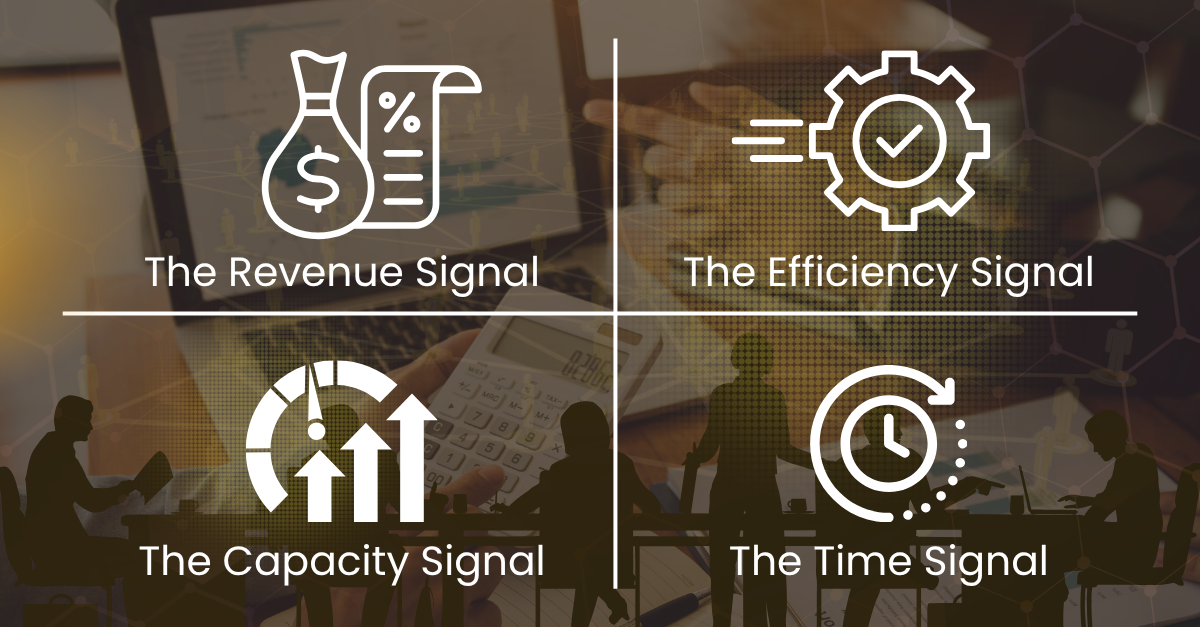
A loan is not good or bad because of the interest rate stamped on the contract. It's good or bad because of what happened after you signed it. Track the four signals above honestly, even if the answer isn't flattering, and you'll know more about your own business than most owners ever bother to find out. And if the honest answer is that you're not sure what your next loan should even look like, that's a conversation worth having before you apply, not after.
Frequently Asked Questions (FAQs)
How do I know if my business loan was a good decision? Track whether the loan generated more revenue than it cost, lowered your daily operating costs, let you serve more customers, and freed up management time. If two or more moved in the right direction, it delivered ROI.
Is it worth getting a business loan for a small business in the Philippines? It depends on whether the loan funds a specific, measurable improvement in sales, efficiency, or capacity, not just cash to get through a slow month. Loans taken reactively without a clear goal are the ones owners tend to regret.
What is a good ROI for a small business loan? There's no fixed percentage that applies everywhere, but at minimum, the revenue or savings the loan enabled should exceed its total cost, principal plus interest, within a reasonable time frame tied to the loan term.
Why do so many Filipino SMEs avoid formal bank loans? Most operate informally without the collateral, credit history, or financial statements banks require, which pushes many toward high-cost informal lenders instead of structured financing.
What's the difference between a working capital loan and a growth loan? A working capital loan covers short-term operating gaps like payroll or supplier payments, while a growth loan funds a specific expansion, like new equipment or inventory, meant to generate additional revenue.


Want to know more? Contact our business consultant
Expert guidance on Business to maximize returns and minimize risks.
Recent Blogs

GTH Quickfund Opens First Philippine Branch in Valenzuela City to Expand MSME Loan Access

GlobalTech Horizons Asia (GTH-Asia) Completes 2025 Preparation Phase and Advances Into 2026 to Evaluate Up to USD 100 Million in Structured Capital Across Southeast Asia
