.png)
Private Credit vs. Bank Loans: What Every Philippine SME Must Know Before Applying for Business Financing in 2026
Most Philippine SMEs get declined not because their business is weak, but because they are applying through a system that was never designed to evaluate them— and private credit is the structural fix they have been missing.

Private Credit vs. Bank Loans: What Every Philippine SME Must Know Before Applying for Business Financing in 2026

Your bank said no. Or worse: they said yes, then gave you terms that would cripple your cash flow for the next three years.
This is the reality for hundreds of thousands of Philippine SMEs in 2026. Traditional bank credit is tightening. Approval timelines stretch from weeks into months. Collateral requirements exclude most small business owners before they even walk through the door. And while you are waiting, your competitors who found alternative capital are already moving.
The question is no longer whether to explore financing. It is whether you are applying through the right channel.
This article breaks down the structural differences between private credit and traditional bank loans, explains which type of financing fits which stage of business, and gives you the decision framework you need to stop waiting and start acting.
What Is a Bank Loan and Why Does It Work Against Most SMEs?
A traditional bank loan is a debt instrument issued by a licensed commercial or universal bank, governed by BSP (Bangko Sentral ng Pilipinas) regulations. Banks use a standardized credit assessment model that scores applicants on five primary criteria, commonly called the Five C's: character, capacity, capital, collateral, and conditions.
For large, established companies, this model works. For SMEs, it often does not. Here is why.
The Bank's Credit Model Was Not Built for SMEs
- Banks require 2 to 3 years of audited financial statements. Most Philippine SMEs do not maintain formal financial records at this standard.
- Collateral requirements typically demand real property at 60 to 80 percent of the loan value. Many entrepreneurs in services or digital sectors do not own land.
- Approval timelines average 30 to 90 days, which is too slow for businesses that need liquidity to capture a time-sensitive market opportunity.
- Credit decisions are centralized, rigid, and standardized. A loan officer cannot override the system for a business that is clearly viable but does not fit the template.
A bank is built to minimize institutional risk. It is not built to identify business potential.
What Is Private Credit and Why Is It Growing in ASEAN?
Private credit refers to non-bank lending arranged directly between a borrower and a private capital provider. This includes private debt funds, family offices, asset-backed lenders, and alternative finance companies. Unlike banks, private credit providers are not BSP-regulated deposit-taking institutions, which gives them structural flexibility in how they underwrite and structure loans.
Globally, private credit has grown into a multi-trillion dollar asset class. Within Southeast Asia, the segment has accelerated sharply since 2024, driven by two forces: tighter bank credit for SMEs and increased institutional capital looking for yield in real-economy lending.
In the Philippines, companies like GTH Quickfund Lending Corporation are bringing private credit infrastructure to the MSME level, offering accessible, community-based lending designed for how Philippine entrepreneurs actually operate.
How Private Credit Underwrites Differently
- Lenders assess business viability, cash flow trends, and transaction data, not just collateral.
- Digital financial records including e-invoices, cloud accounting exports, and payment data are accepted as evidence of creditworthiness.
- Decisions can be made within days, not months.
- Loan structures are negotiated based on the business's actual repayment capacity, not a fixed institutional template.
In 2026, your digital paper trail— your e-invoices, your accounting records, your payment history— is your new collateral. Private credit lenders know how to read it. Most traditional banks do not.
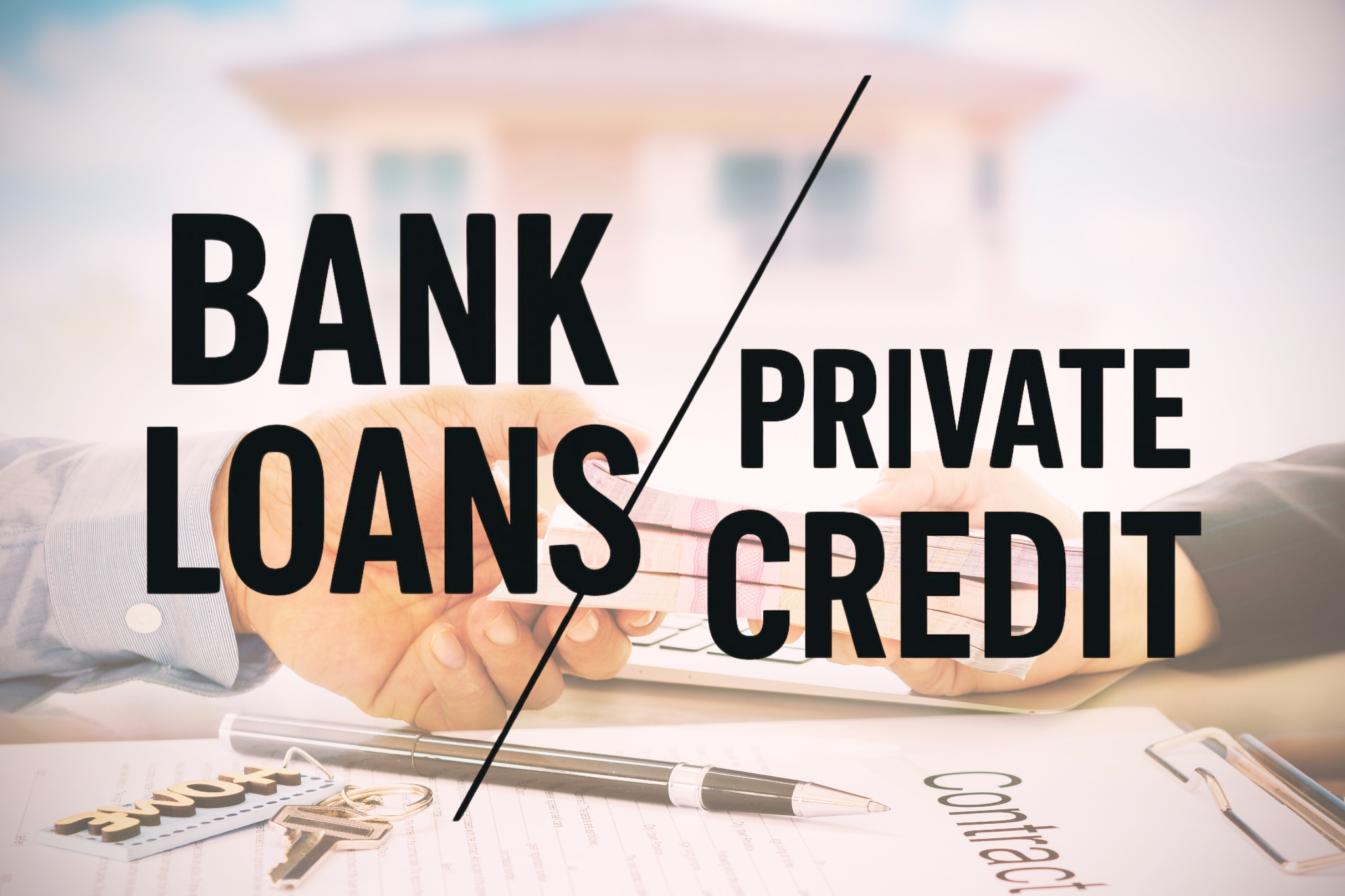
Private Credit vs. Bank Loans: A Direct Comparison
Use this as your first filter before choosing a financing path.
Speed: Bank loans average 30 to 90 days for approval. Private credit can be processed in 3 to 10 business days.
Collateral: Banks require hard assets (land, property) at 60 to 80 percent LTV. Private credit uses cash flow data, business assets, and operating records.
Documentation: Banks demand 2 to 3 years of audited financials. Private credit typically requires 6 to 12 months of cash flow data and basic business registration.
Flexibility: Bank loan structures are standardized. Private credit can be tailored: revolving facilities, asset-backed tranches, operating-backed structures.
Interest Rate: Banks offer lower nominal rates subject to BSP benchmarks. Private credit rates are higher to reflect the risk premium of underwriting non-standard profiles.
Relationship: Banks are institutional and transactional. Private credit providers often function as long-term capital partners.
Which Financing Option Is Right for Your Business?
Neither private credit nor bank loans is universally superior. The correct answer depends on your business stage, financial profile, urgency, and purpose.
Choose a Bank Loan If:
- Your business has been operating for 3 or more years with clean, audited financials.
- You own registered real property that can serve as collateral.
- Your financing need is not time-sensitive and you can wait 60 to 90 days for approval.
- You need a large facility (PHP 10M+) at the lowest possible nominal interest rate.
Choose Private Credit If:
- You are an SME with strong cash flow but limited or no hard collateral.
- You need financing within 2 to 4 weeks to capture a business opportunity.
- Your financial records are digital: cloud accounting, e-invoices, online payment data.
- You are in growth phase and need a flexible facility that can scale with your business.
- You have been declined by traditional banks and need a viable alternative, not a predatory lender.
The right financing source is the one that matches your actual business reality, not the one that sounds most prestigious.
The 2026 Regulatory Landscape: Why Digital Records Now Matter More Than Ever
The Philippine government's mandatory e-invoicing rollout now covers large taxpayers and is expanding to SMEs. Every e-invoice you issue is a verifiable, timestamped record of your revenue. Every cloud accounting entry is auditable transaction data.
Private credit lenders and increasingly even BSP-supervised digital banks are building underwriting models around this data. The SME with clean digital records in May 2026 is the same SME that will access capital faster, at better terms, in Q3 2026 when the next round of tightening hits.
Businesses still running manual bookkeeping or informal record-keeping are not just inefficient. They are actively blocking their own access to capital.

How GTH Quickfund Is Changing Access to SME Capital in the Philippines
GTH Quickfund Lending Corporation, part of GlobalTech Horizons Asia (GTH-Asia), opened its first Philippine branch in Valenzuela City in March 2026, specifically to address the capital access gap for MSMEs who are too viable for informal lenders but too informal for traditional banks.
The GTH Quickfund model is built on three principles: faster processing than traditional banking timelines, simpler documentation requirements anchored in digital business records, and credit assessment focused on the business's actual operating capacity, not just its asset register.
For the Philippine MSME that has been growing steadily, maintaining digital records, and managing cash flow responsibly, GTH Quickfund represents a structured, institutional-grade alternative to informal lending without the opacity and exploitation that defines the informal credit market.
Three Steps to Prepare for Any Business Financing Application in 2026
Regardless of whether you approach a bank or a private credit provider, the following steps will materially improve your approval rate and your terms.
- Digitize and organize your financial records. If you are still on manual bookkeeping, migrate to a cloud accounting platform now. Your income statement, cash flow statement, and accounts receivable aging report should be available within 24 hours of any request.
- Understand your Cash Conversion Cycle. Know how long it takes cash to flow from initial spend to collection. A lender will ask this, even if they do not use that phrase. The answer tells them whether you can actually service the debt.
- Apply while you are strong, not when you are desperate. The best time to access capital is when your financials show health. Every application made from a position of distress produces worse terms. Build your financing relationships before you need them.
The Bottom Line
The Philippine SME still waiting for a traditional bank to say yes is losing time it cannot recover. The credit environment in 2026 is tighter, faster-moving, and more structurally complex than any previous cycle.
Private credit is not a last resort. For the right business— one with verifiable cash flow, digital records, and a growth trajectory— it is the strategically superior choice. Faster, more flexible, and structured to match how your business actually works.
The question is not whether you can afford to explore private credit. It is whether you can afford not to.
Frequently Asked Questions (FAQs)
What is private credit for SMEs? Private credit is non-bank lending arranged directly between a business borrower and a private capital provider such as a lending corporation, private debt fund, or alternative finance company. For SMEs, it offers faster approval, more flexible structures, and cash flow-based underwriting without the rigid collateral and documentation requirements of traditional bank loans.
Can a Philippine SME get a business loan without collateral? Yes. Private credit lenders like GTH Quickfund do not require registered real property as collateral. Instead, they use your business's cash flow data, e-invoice records, and digital accounting history to assess creditworthiness. If your business has consistent revenue and clean digital records, you can qualify even without land or physical assets to pledge.
How does e-invoicing affect my ability to get a business loan in 2026? The Philippine government's mandatory e-invoicing rollout means every invoice you issue is now a verifiable, timestamped revenue record. Private credit lenders and digital banks are building underwriting models directly around this data. SMEs that are compliant with e-invoicing requirements and maintain clean digital records will qualify for financing faster and on better terms than businesses still relying on manual bookkeeping.
What documents do I need to apply for private credit in the Philippines? Requirements vary by lender, but most private credit providers in the Philippines require: 6 to 12 months of bank statements or cash flow data, basic business registration documents (DTI or SEC registration, BIR COR), proof of operating history, and digital financial records such as e-invoices or cloud accounting exports. GTH Quickfund specifically anchors its assessment in digital records and actual operating capacity rather than formal audited statements.
What is GTH Quickfund and how is it different from a bank? GTH Quickfund Lending Corporation is part of GlobalTech Horizons Asia (GTH-Asia), a Singapore-headquartered financial group. It is a private credit lender, not a bank. GTH Quickfund opened its first Philippine branch in Valenzuela City in March 2026 to serve MSMEs who qualify for institutional-grade capital but do not meet the rigid requirements of traditional banks. Its model is built on faster processing, simpler documentation, and community-level credit access.
READY TO STRUCTURE YOUR FINANCING STRATEGY?
- For MSMEs in the Philippines: Access transparent, community-level credit. Explore GTH Quickfund or Search through GTH-Asia.
- For Regional Enterprises: Audit your risk management and capital access. Contact JYSigma Business Consultancy.
- For Investors: Read the April 2026 Newsletter Issue GTH-Asia Newsletter.


Want to know more? Contact our business consultant
Expert guidance on Business to maximize returns and minimize risks.
Recent Blogs

GTH Quickfund Opens First Philippine Branch in Valenzuela City to Expand MSME Loan Access

GlobalTech Horizons Asia (GTH-Asia) Completes 2025 Preparation Phase and Advances Into 2026 to Evaluate Up to USD 100 Million in Structured Capital Across Southeast Asia
